
My Picks for “Blue Chip vs New Chip” Collector Cars
Sean Rooks | June 8, 2026
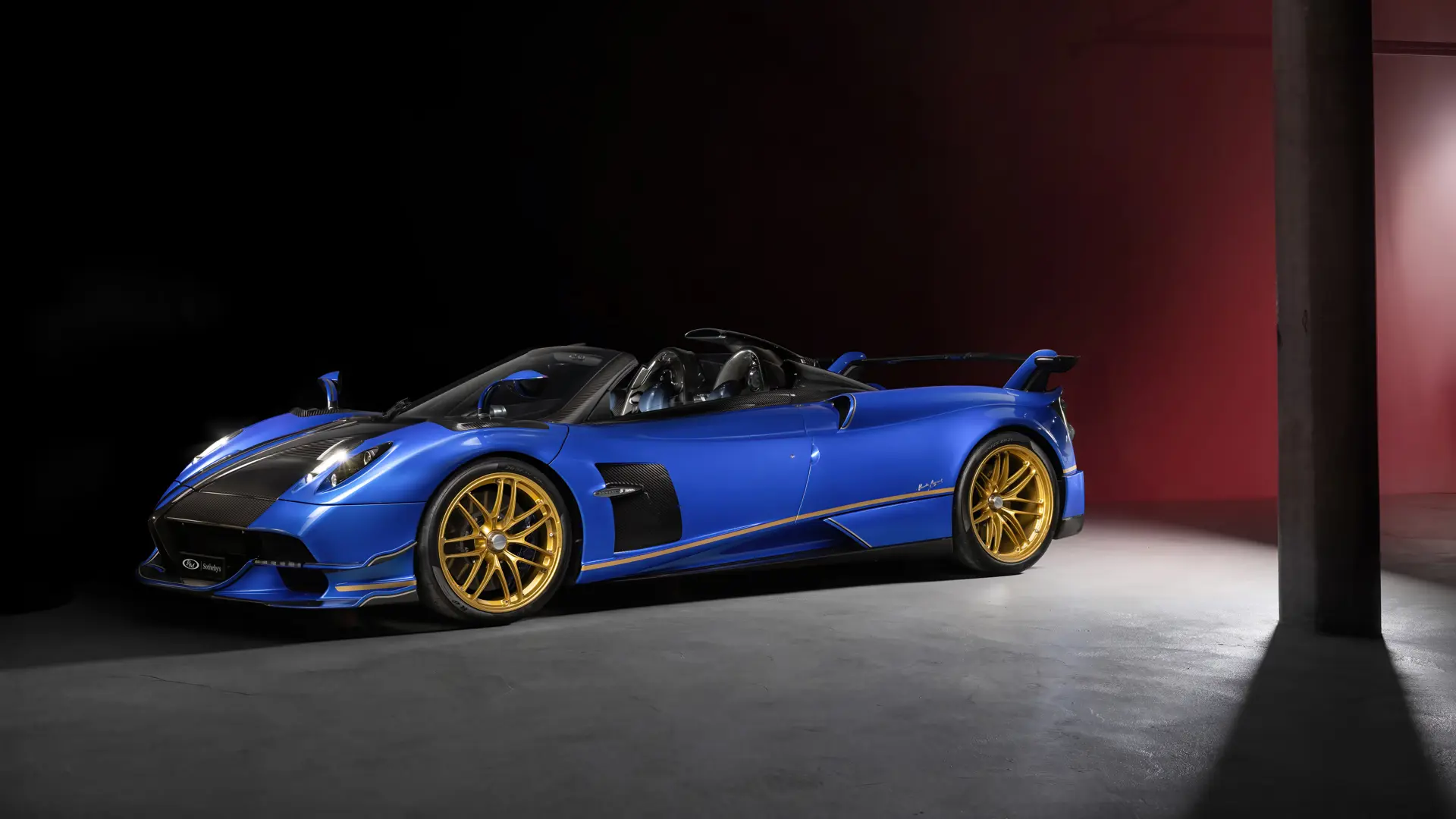
The first quarter of 2026 has seen an impressive increase in attention and value on modern classic cars, prompting many to believe we’re finally witnessing the generational shift predicted for many years. Hagerty’s market rating and index reports show a collector car market growing for newer vehicles, but shrinking for classics from the 1960s. Hagerty’s Blue Chip Index lists no cars built after 1973, prompting the insurer and media company’s Andrew Newton to postulate which cars may comprise the new crop of blue chip collectibles. His list is solid, but I have quibbles. In today’s Market Monday, I thought I’d share my picks for Blue Chip vs New Chip collector cars
Hagerty’s Blue Chip Index
Hagerty publishes regular updates on the state of the collector car market in two ways. First, it publishes the Hagerty Market Rating, which measures the “heat”, momentum and overall strength of the collector car market. Attributes such as sales activity, rate of change in sales volume and activity, value performance and economic indicators are used to plot the current market on a scale of 0-100.
Second, the Hagerty Market Index tracks the car market more like the stock market, with an open-ended rating generated via a variety of metrics including sales volume, expert sentiment, insured vehicle values, and economic performance indicators such as the S&P 500. In addition to the overall rating, Hagerty tracks the performance of a variety of sub-indexes, including “Blue Chip” cars — or the 25 most sought-after postwar vehicles.
Andrew Newton selected 6 cars from the Blue Chip Index to update with modern equivalents, and given the top 5 cars on the index have some overlap (multiple Ferrari 250GT Spiders, for example), he chose a cross-section. I encourage you to read his post, which includes rationale for his choices.
My Take on Hagerty’s “New Chip vs. Blue Chip”
There’s no specific reason given for Newton’s choice of cars to update, aside from “picking out a handful” for comparison. For my list, I’ve tried to find modern equivalents of vehicles already on the Blue Chip Index that don’t overlap and reflect today’s tastes. I personally don’t believe the existing index has to influence a “New Chip” index at all, but it does make the thought exercise a little easier. In my opinion, every car I’ve picked below would deserve to be listed on a “New Chip” index.
Blue Chip: Ferrari 250 GT
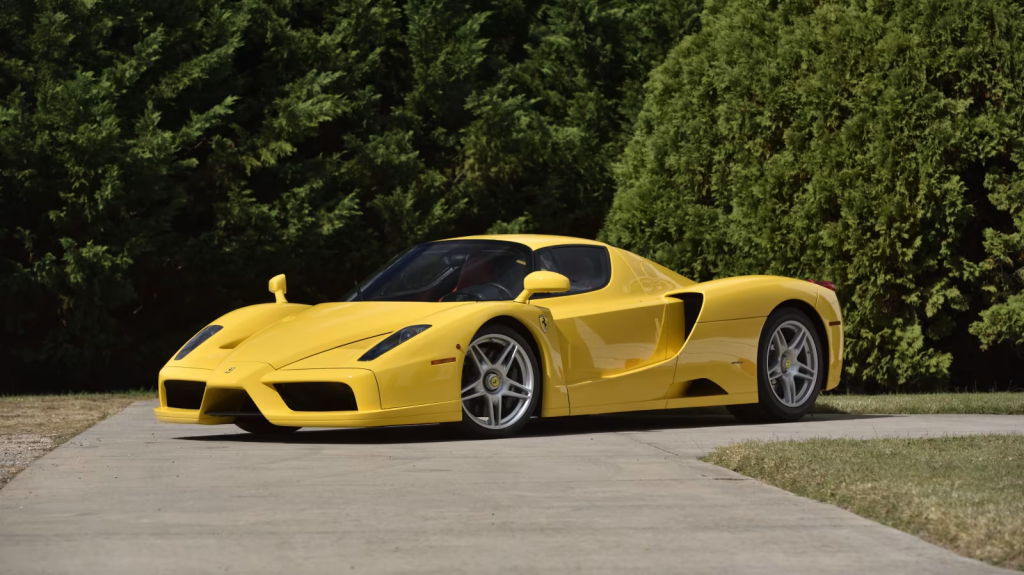
New Chip: Ferrari Enzo
The Ferrari 250 GT is a family of front-engine V12 grand touring cars produced throughout the late 1950s and early 1960s. Over 1,300 were built in multiple body styles for passenger travel and racing, with the California Spider and the 250 GTO being the most valuable to collectors. The 4-seater 250 GTE made up the bulk of production, however. The 1963 Ferrari 250 GT California Spider is the variant tracked on Hagerty’s Blue Chip Index, and the value of a #2 Excellent car in their price guide is $14,550,000.
The Ferrari Enzo was developed in 2002 using Formula One technologies like a carbon-fiber body, automated automatic transmission, ceramic composite brakes, and active aerodynamics. Five hundred were built and were offered exclusively to owners of the Ferrari F40 and F50. The last one construced was famously donated to the Vatican for charity. Values for the Enzo have been high for some time, but the record was absolutely shattered by the $17,875,00 sale at Mecum Kissimmee earlier this year. While production numbers may prevent the Enzo from ever reaching the $40-50M values of 250 GTOs, it’s now comfortably among other 250 GT variants in price.
Blue Chip: Porsche 911 Carrera RS 2.7
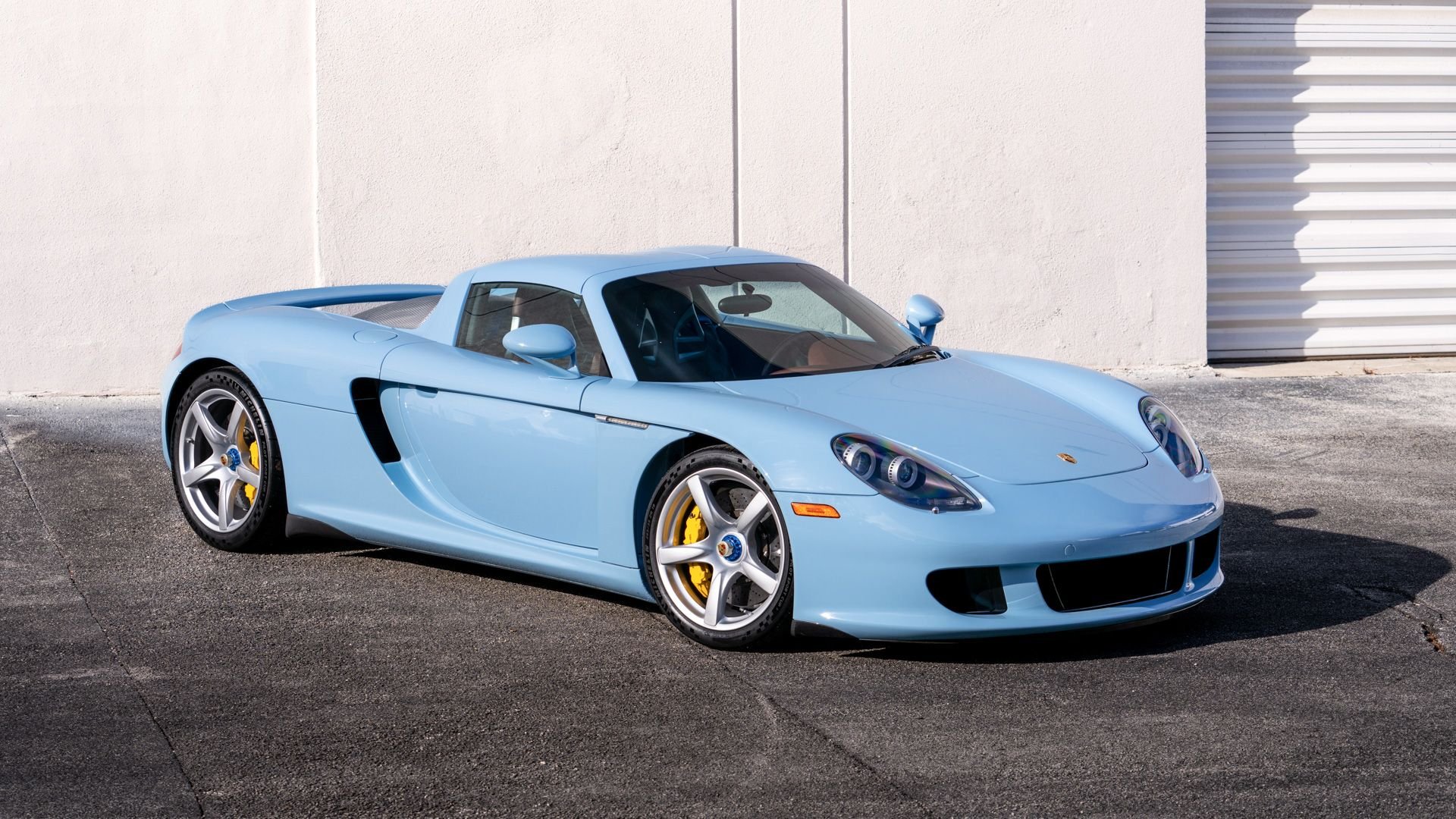
New Chip: Carrera GT
The 1973 Porsche Carrera RS 2.7 is an icon in the Porsche world and a highly desirable classic from Porsche’s air-cooled era. It was a homologation special built to enable racing eligibility for the 911 platform, featuring lightweight construction, a distinctive “ducktail” spoiler and a production run of approximately 1,580 cars. Hagerty currently lists the value of a #2 Excellent 2.7 Carrera RS at $740,000.
The Carrera GT has its origins in an aborted GT1 and LMP1 program car intended to use a new V10 engine designed in secret. The concept for the car debuted in the year 2000 to tremendous interest, and production started in 2004. 1,270 cars were built, with 5 colors offered at first with paint-to-sample an available option later in production. Values were under $2M for years, but a series of recent record-breaking sales — including a $6,715,000 auction in March of this year — have completely reset expectations for the car.
Blue Chip: Tucker 48 Sedan
New Chip: Pagani Huayra
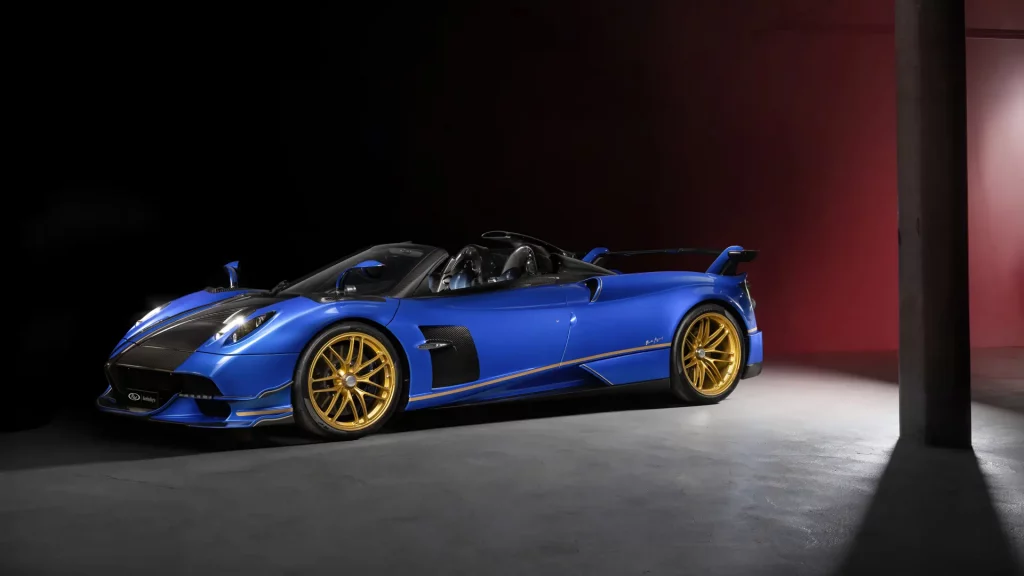
Conceived by Preston Tucker to realize his vision for automotive safety, the Tucker 48 featured a rear-mounted engine, steerable headlights, crash protection and further innovations. Preston’s (and the car’s) story was famously told in a movie starring Jeff Bridges in 1988. With only 51 cars completed, any extant vehicle is an artifact from one of automotive history’s most inspiring and interesting stories. Hagerty values a #2 Excellent Tucker 48 Sedan at $1,550,000.
Where Tucker failed to reach scale with his innovations, Horatio Pagani succeeded with a focus on limited production, over-the-top engineering and craftsmanship. After success working for Lamborghini as a contractor, Pagani decided to design his own car in the late 1980s. Eventually, a prototype was built and development of the platform would eventually result in the very first Zonda. Its successor, the Huayra, was critically acclaimed for its combination of opulence and functional engineering. The average value for a Pagani Huayra in today’s market is $3,300,000, demonstrating its desire among top-tier collectors.
Blue Chip: Alfa Romeo TZ-2
New Chip: Maserati MC12
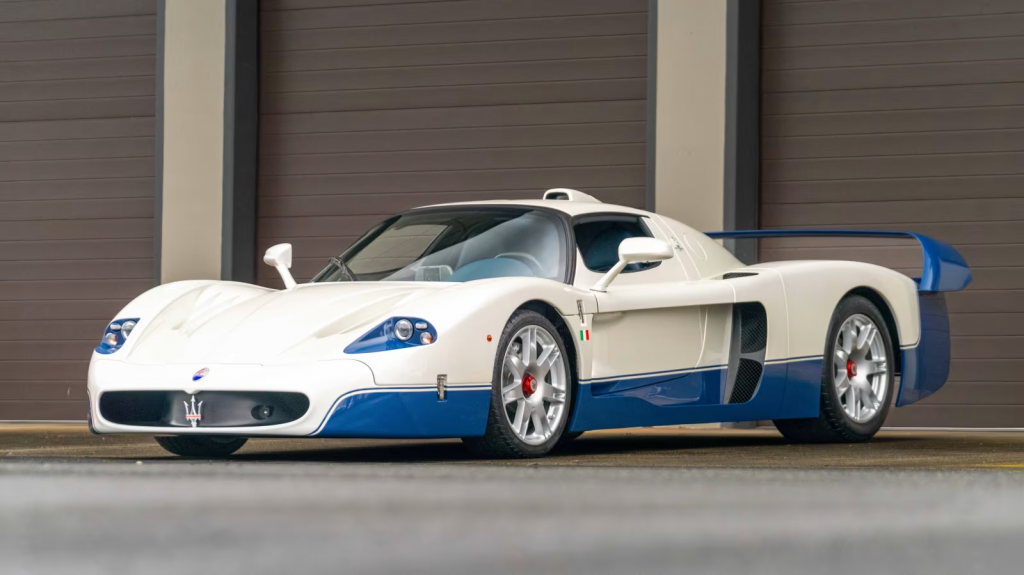
The Alfa Romeo TZ-2 Coupe was a lightweight racing coupe with a tubular chassis and fiberglass bodywork designed by Zagato to go endurance racing. It’s a beautiful car that prioritized lightness and aerodynamic efficiency, which resulted in numerous wins in races such as the 12 Hours of Sebring and the Targa Florio. Hagerty tracks values of the TZ-2 in its price guide, and the value as of its April update is $4,250,000.
Developed by Maserati to race in the FIA GT Championship, the Maserati MC12 was based on the proven chassis of the Ferrari Enzo, but the MC12 is much larger with a more slippery body. Road versions of the car were produced to homologate the race version, with 25 cars required to participate in GT racing. While reviews were mixed, many consider the MC12 to be a much more friendly road-going car than the Enzo. Values are rising for the MC12, with the latest sale of a delivery-mileage car fetching $9,460,000.
Blue Chip: Jaguar D-Type
New Chip: McLaren F1
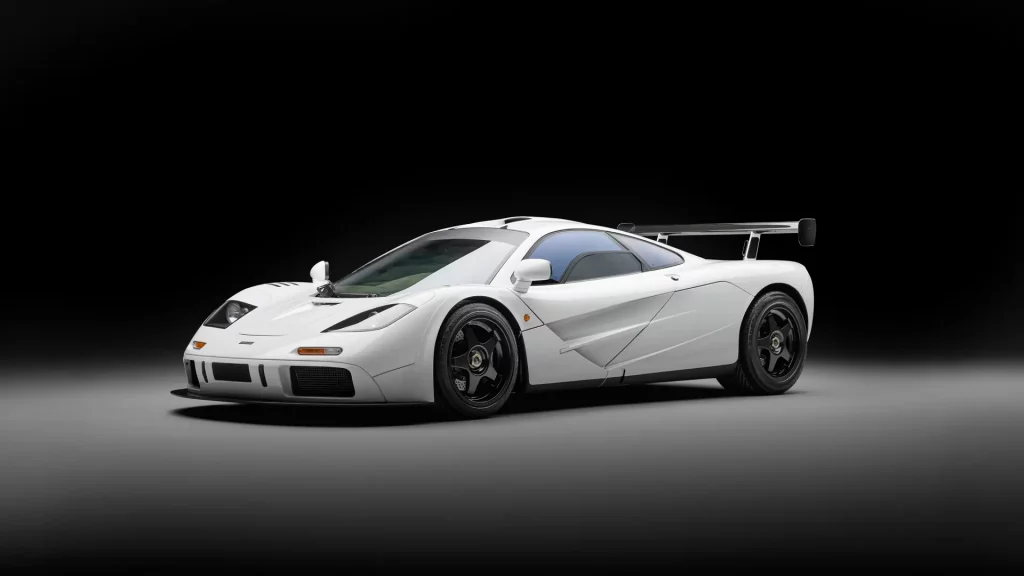
The Jaguar D-Type was built specifically to win Le Mans, which it managed to accomplish for three-years running. It was a massive leap forward from its predecessor, introducing disc brakes and bodywork designed in a wind tunnel. Supposedly only 75 were built, though the brand has produced a limited run of “continuation” builds. Hagerty values an excellent condition D-Type Jaguar at $5,300,000.
Considered one of the greatest supercars ever built, the McLaren F1 was designed by Gordon Murray as the first road-going car developed by McLaren. Powered by a BMW V12 engine and featuring unusual three-across seating and the first use of a carbon-fiber tub, the F1 could sprint from 0-60mph in 3.2 seconds — fast even today and blistering for 1992. As supercars go, the McLaren F1 is one of the most expensive to acquire, with the most recent sale exceeding $25,000,000. While it was designed as a road-going car, the McLaren F1 GTR won a historic victory at Le Mans in 1995. One could argue the McLaren F1 is the modern successor to the Ferrari 250 GTO in terms of value and prestige, but I wanted to update a British car with another British car.
Blue Chip: Mercedes-Benz 300SL Gullwing
New Chip: Mercedes-Benz 190E 2.5-16 Evolution II
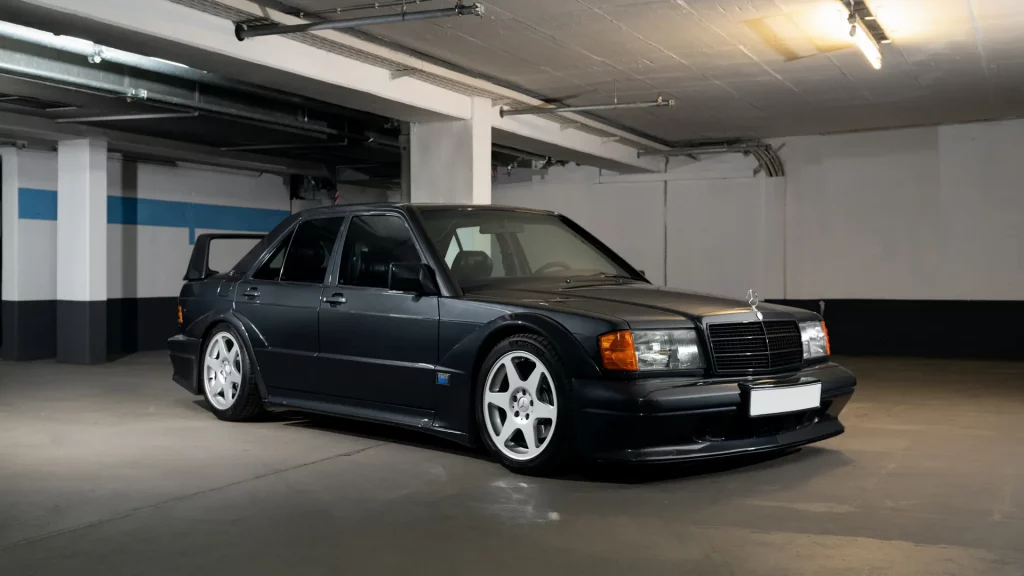
Widely celebrated as the first true supercar, the Mercdes-Benz 300SL Gullwing is famous for its gullwing doors, advanced mechanical fuel injection, and a top speed of 160mph — all incredible attributes for the mid-1950s. Around 1,400 were built and they appear at auction relatively frequently, but remain highly prized collectors items and a barometer for the state of the car market. A #2 Excellent 300SL Gullwing will run you $1,900,000 in today’s market.
The Mercedes-Benz 190E 2.5-16 Evolution II represents the last time Mercedes turned a normal production car into a homologation legend that collectors now treat as a blue-chip collectible. Just 502 examples were built, all with a Cosworth-developed AMG inline four that put out 232hp and aerodynamic bodywork designed to increase downforce and reduce drag. The car was offered to privateers and in 1992 the car finally won the DTM championship in its Evo II configuration. Average values stand at over $300,000 today, but is there room to grow? One could argue the CLK GTR would be a better fit here, but I wanted to include something produced in a quantity similar to the iconic Gullwing.
Final Thoughts
This was a challenging exercise, but selected my “New Chip” cars first and matching them up to a classic from the 60s and 70s made the task a little easier.
My list is intended for fun, and not for investment purposes. Given the popularity and values for many of these “new chip” cars, I am genuinely curious if Hagerty may update their blue chip index to include some of these vehicles — or create a new index altogether.
Let me know what you think about my selections in the comments below! Have a great week, everyone.
Wolf and Mare provides car finding, appraisals, and auction services for buyers and sellers of collector European cars. If you’re interested in acquiring an overseas car, give us a call or drop a line!
