
Is the First-Gen Datsun Z-Car Still Affordable?
Sean Rooks | June 30, 2026
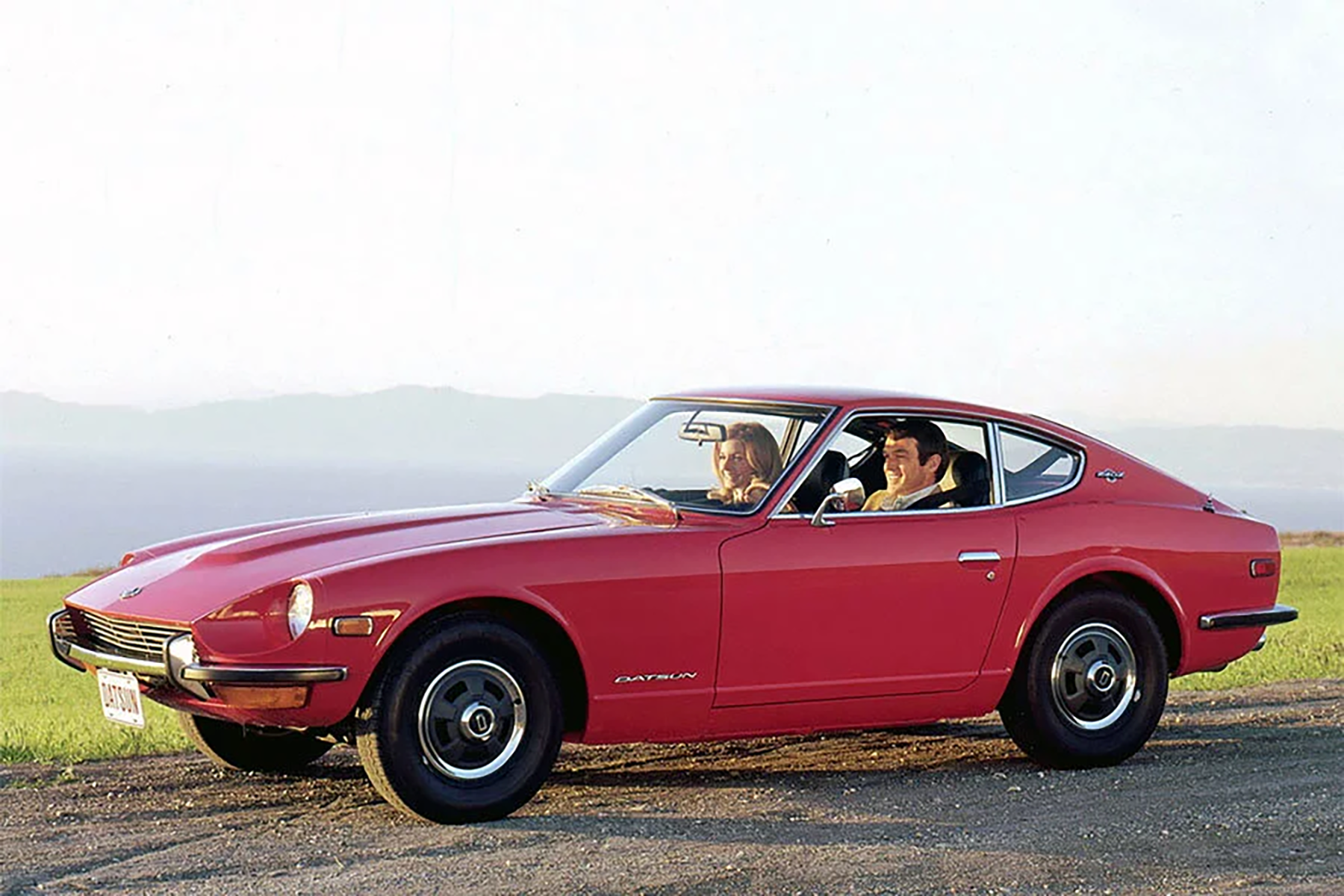
My first car ever was a Datsun and for some reason I don’t talk much about it. Perhaps it’s because it was a lowly 1984 Datsun Sentra, whose only interesting fact is that it was dual-badged a “Datsun-Nissan.” It was a reliable car, but I’m not much into JDM vehicles — preferring European metal — but occasionally a car from Japan earns my affection. I’ve always admired the styling of the Z, and in today’s Market Monday, I’m assessing whether the Datsun Z car is still an affordable classic.
The Datsun Fairlady Z
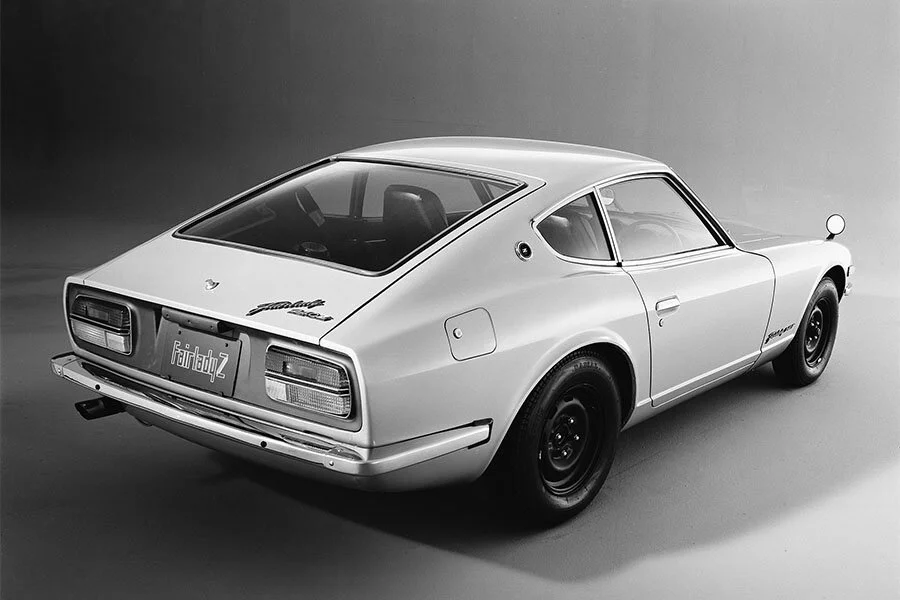
The Datsun Z-car shows up in the U.S. for 1970 with the 240Z, but it really doesn’t start in isolation. Nissan had been watching the way the Japanese performance image was starting to shift in the late ’60s, especially after the Toyota 2000GT proved there was a global audience willing to take Japanese sports cars seriously. The difference was that the 2000GT was more of a statement piece—beautiful, sophisticated, very limited and today very collectible (and expensive). Nissan’s intent with the S30 Fairlady Z program was to be much more accessible: something that could actually sell in volume in the U.S., hit the price point, and still carry enough performance and style to compete with established European cars.
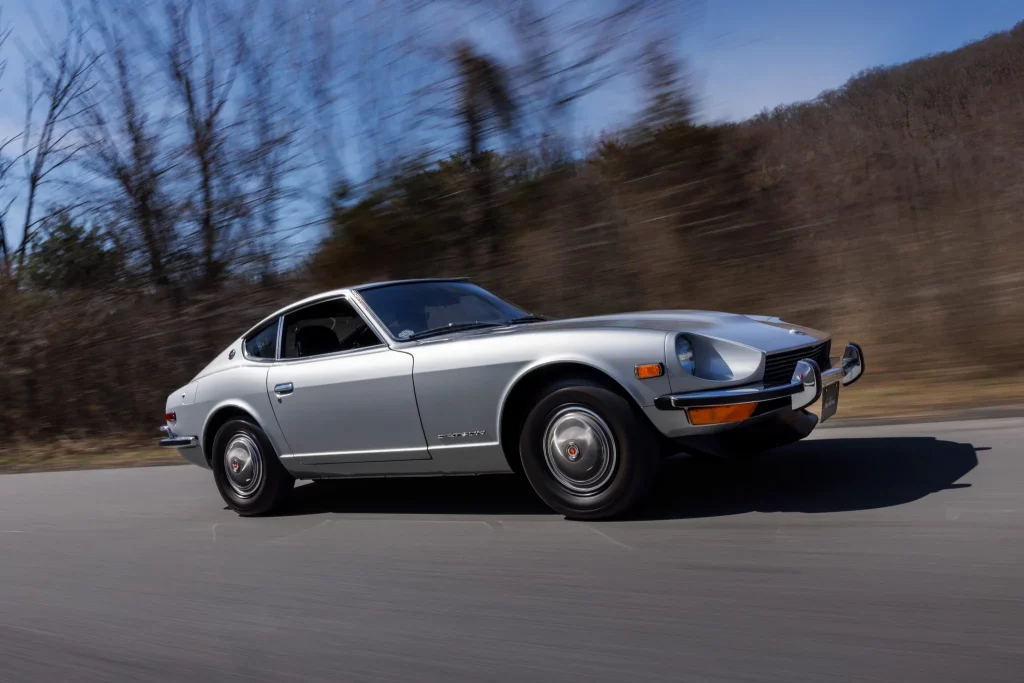
That’s where the 240Z lands. In U.S. spec, it uses the 2.4-liter L24 inline-six with twin Hitachi-SU carburetors, paired initially with a 4-speed manual and later a 5-speed. It’s a fairly simple setup by modern standards, but that was part of the appeal—it was light, straightforward, and had just enough performance to feel special without being exotic or fragile. The proportions did a lot of the work too: long hood, short rear deck, and a shape that still feels right decades later. Over its early run, Nissan made incremental updates for emissions and safety, but the core package stayed consistent from 1970 through 1973.
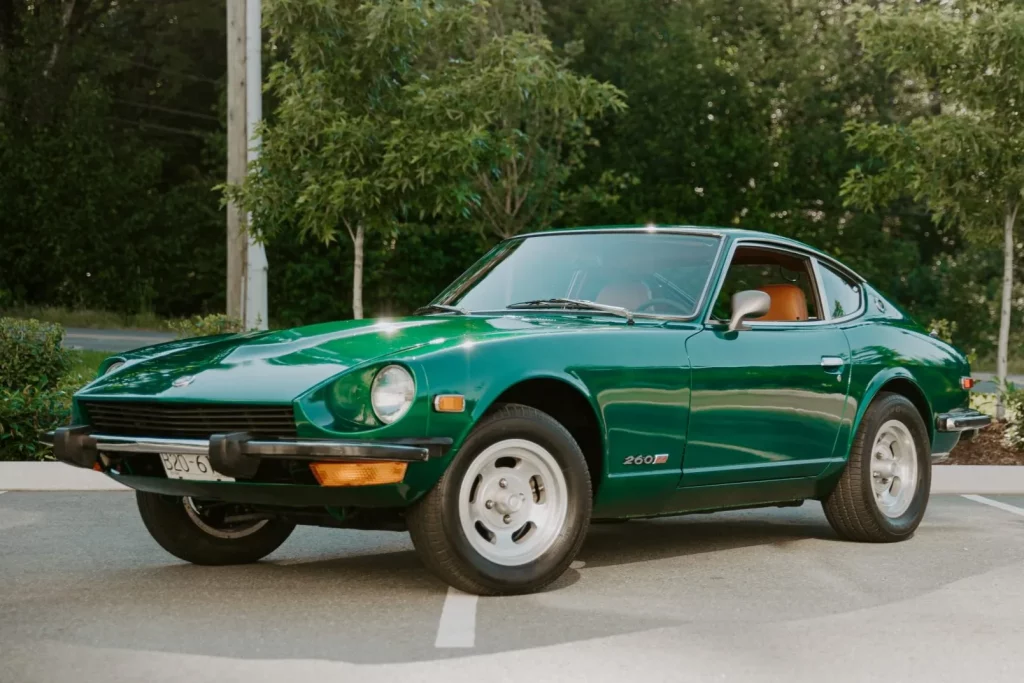
The 260Z debuted in 1974 and in the US that’s the only year it was available, though it was sold elsewhere until 1978. The engine grew to 2.6 liters (L26), not so much to chase performance gains as to recover some drivability lost to early emissions controls — a common tactic among imports. In the U.S., this is also when the 2+2 version becomes part of the lineup, along with some interior revisions and updated bumpers. It only lasts a short time, but it sets the stage for what’s coming next as regulations tighten further.
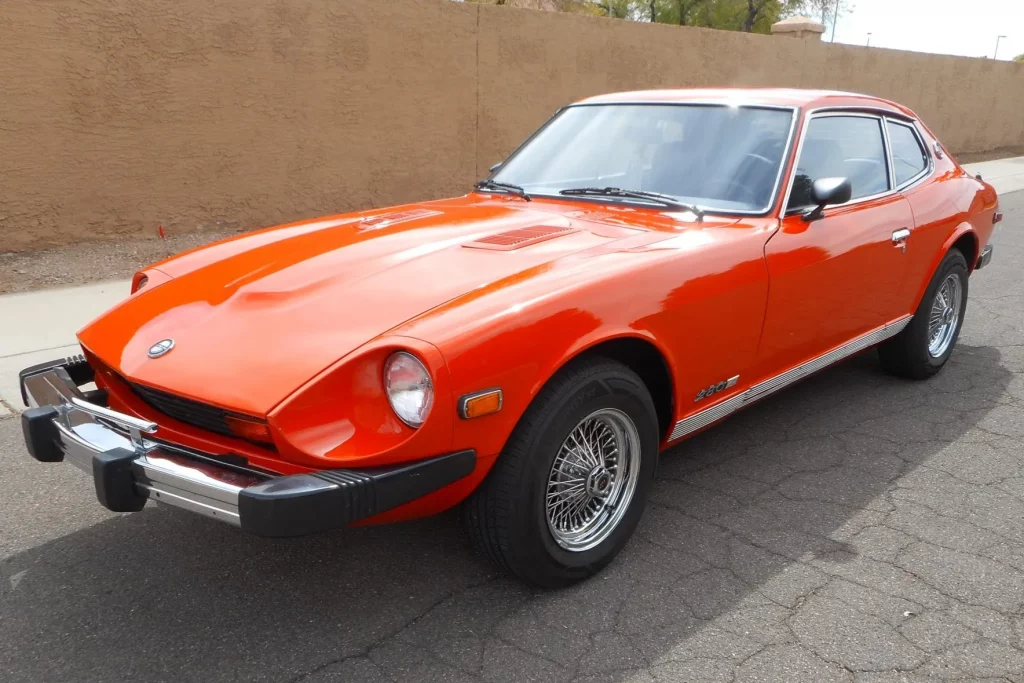
In 1975 the 280Z was released and you can feel the shift in priorities. The engine was now a 2.8-liter L28, now with Bosch L-Jetronic fuel injection, which was really about meeting emissions standards and improving consistency in everyday use. Around the same time, the cars gain the heavier 5-mph impact bumpers and additional structure to comply with U.S. safety rules, which changes the visual balance a bit and adds weight. Still, underneath it all, it’s the same S30 architecture carrying through.
Which Datsun Z Car to Buy?
If price is your primary consideration, here’s a breakdown of the average prices by variant for the 240Z, 260Z and 280Z cars.
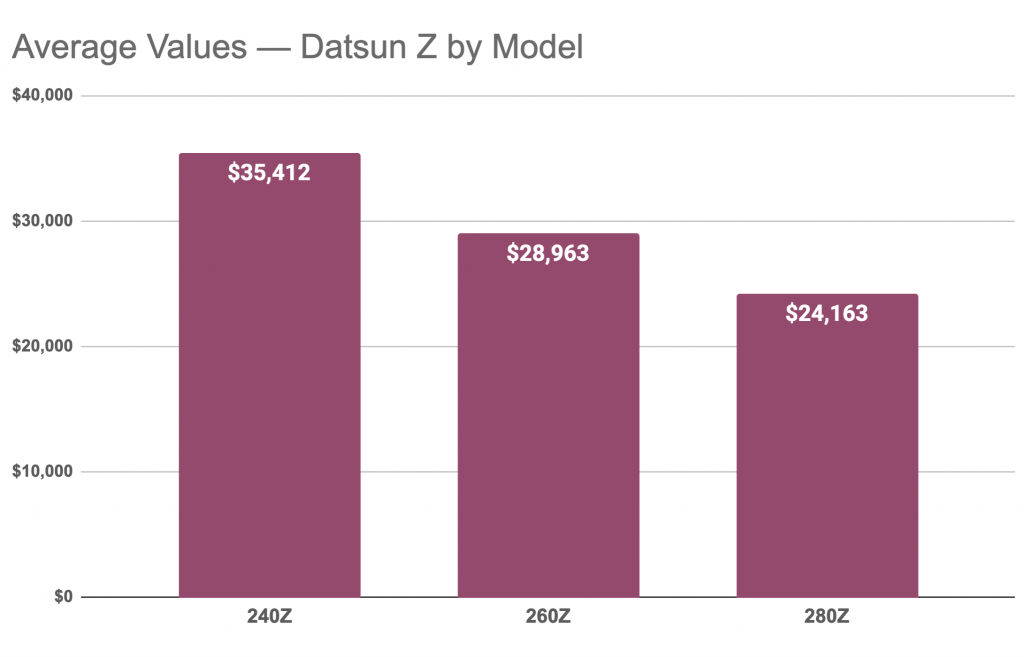
As you can see the 280Z offers the best bargain, but to many the 240Z will always have the best looks. I can sympathize with this, as I typically gravitate to the first iteration of a car. The initial bodywork — free of later changes due to regulation or fashion — tends to be a more pure expression of the designer’s intent.
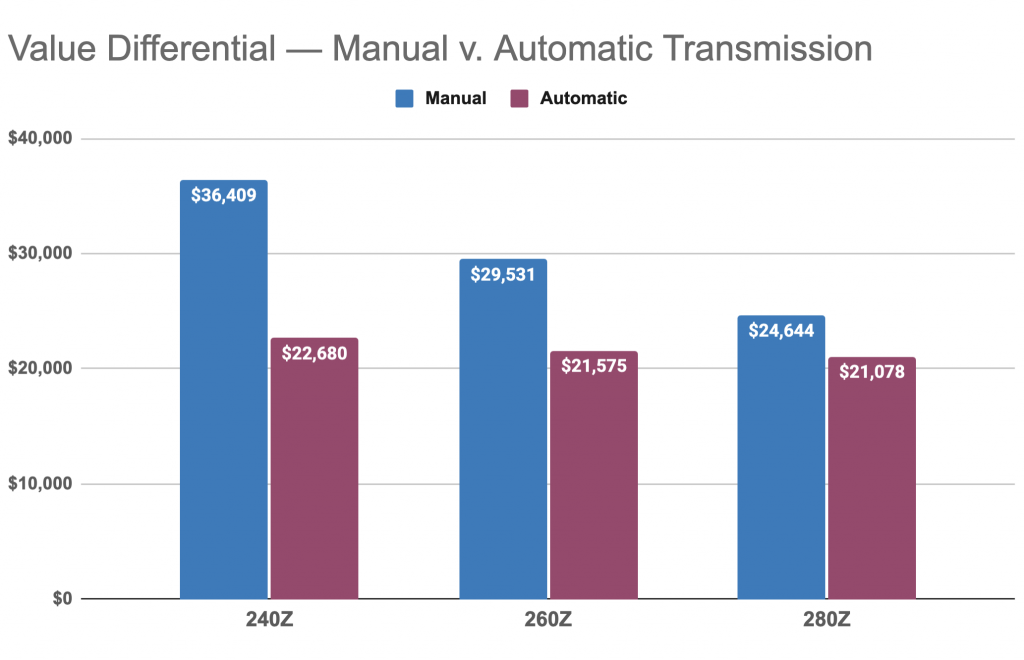
The vast majority of Datsun Zs were specified with a manual transmission and in the US that means a 4-speed, as the 5-speed was rare until 1977. A three-speed automatic was available for those that required it. Values for the automatic definitely take a hit. Interestingly, the automatic transmission basically wipes out the desirability of the 240Z relative to the later models.
It should be noted that 4-speed swaps are relatively easy on these cars and companies even offer conversion kits, but may harm the value of a highly original, low miles car. Depending on the car you’re starting with, the cost and effort of conversion may not be worth it.
With all the discussion of the rise in popularity of cars from the 1980s and 1990s, is the successor to the Datsun Z, the Nissan 300ZX, starting to rival its progenitor in terms of value?
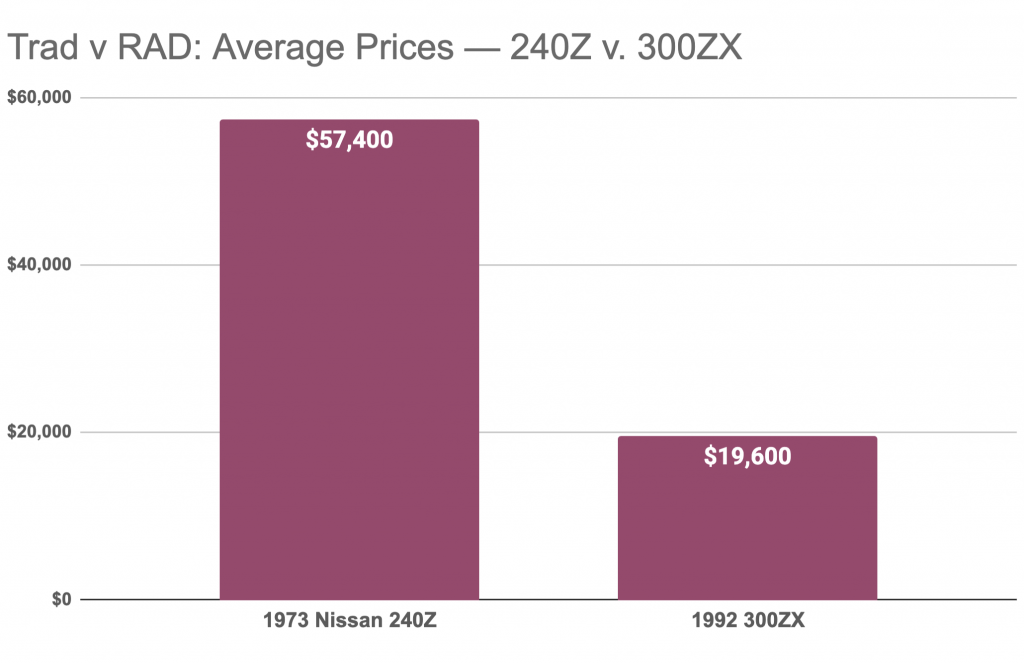
Currently, the value of an excellent condition Datsun 240Z has a massive lead over the 300ZX, but when you start comparing the 300ZX to a 280Z, the difference becomes negligible.
Final Thoughts
Whether the First-Gen Datsun Z car is still affordable really depends on your preferences and budget. Compared to some classics, such as 1970s Porsche 911s, the Datsun Z offers a very affordable alternative to the classic sports car experience.
I’m not in the market for a Datsun Z car, but if I were I’d probably be looking for a 240Z in good condition with an asking price under $20,000 in an interesting color. While I love low-miles preservation cars, there’s one modification I’d have to make: adding the acrylic headlight covers used on the Fairlady ZG. Man, do they look good.
Have a great week everyone.
Wolf and Mare provides car finding, appraisals, and auction services for buyers and sellers of collector European cars. If you’re interested in acquiring an overseas car, give us a call or drop a line!
