
Second Sons: 5 Classic Cars Overshadowed by Their Siblings
Sean Rooks | February 23, 2026
When a car is priced out of reach, enthusiasts often turn to the next best thing. In some cases, it’s the succeeding generation of an iconic make and model. These cars tend to offer a similar, if not better, experience than their predecessors but are overshadowed by their big brothers and can therefore be more affordable alternatives. In today’s Market Monday, I’m featuring a handful of “second sons” — 5 classic cars overshadowed by their brothers.
Aston Martin DB6
When I think of next-generation cars that are more affordable and than their predecessors, my mind goes straight to the Aston Martin DB6 and its predecessor, the DB5. The Aston Martin DB5 is a classic British grand tourer that first appeared in 1963 as the follow-up to the DB4. It was powered by a 4.0-liter inline-six with a five-speed gearbox, giving it blistering performance for a luxury GT of its time. The DB5 featured rounded front fenders with faired over headlights, but was otherwise very similar to the DB4 in overall styling. Around 1,059 were built, including coupes and convertibles. Its appearance in the 1964 James Bond film Goldfinger catapulted it to icon status. While the market has softened a bit, the average DB5 can still bring between $600,000-700,000 at auction.
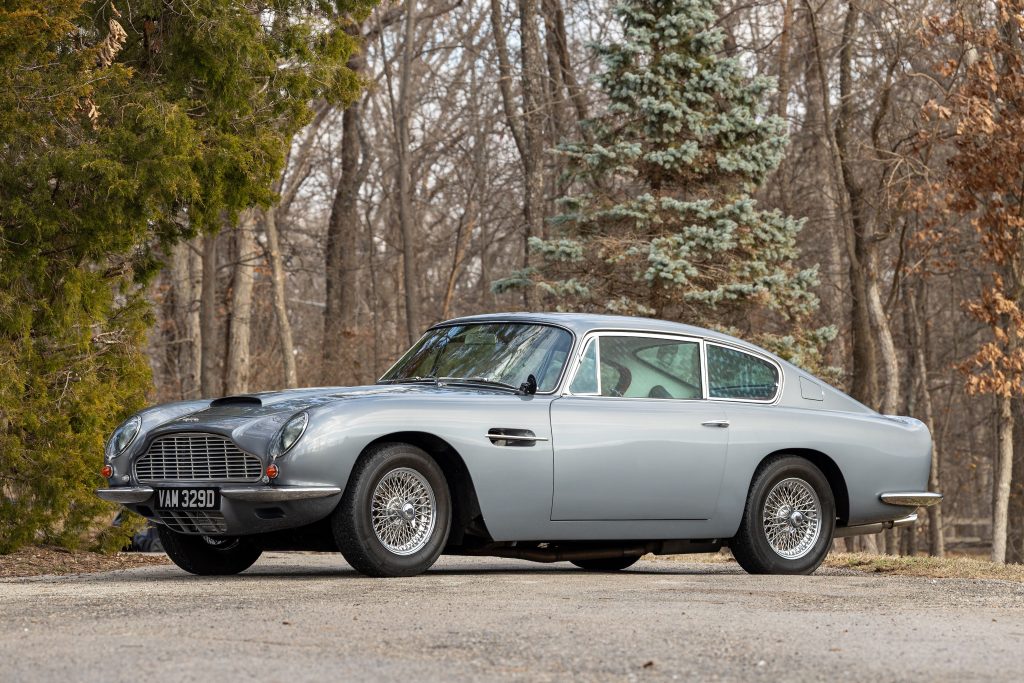
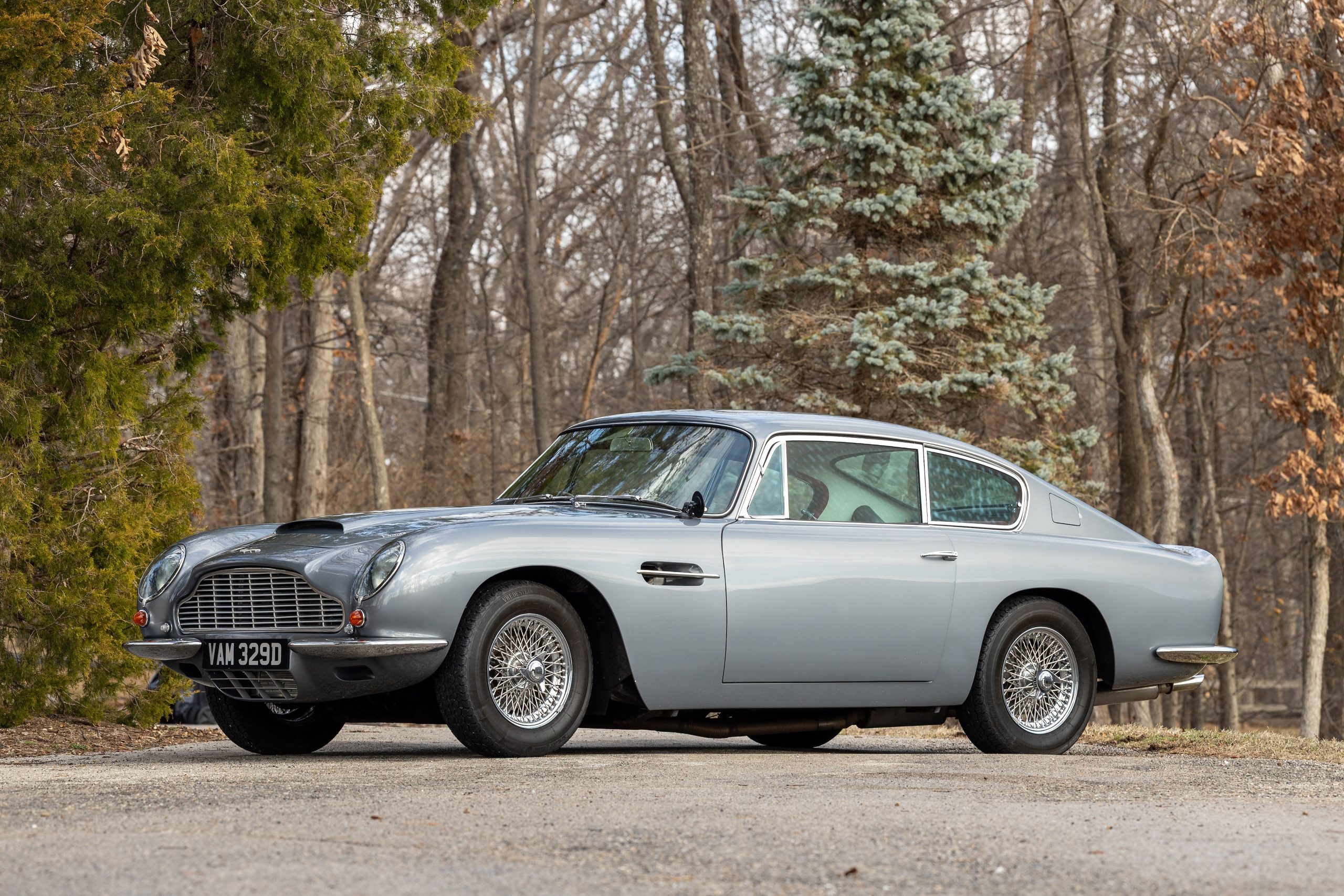
The Aston Martin DB6 arrived in 1965 as an evolution of the DB5, keeping the same 4.0-liter engine but stretching the wheelbase and reshaping the rear with a distinctive — and very attractive in my opinion — “Kamm tail” for better high-speed stability. It also offered a more spacious cabin and an optional Volante convertible, making it slightly more practical while still retaining the style and presence that made the DB5 so admired. The bumper treatment on the DB5 is arguably more attractive and the larger size of the DB6 makes it a bit more imposing, but I’ve always thought the DB6 was an underrated gem when a DB5 is out of reach. One can find a decent Aston Martin DB6 for half the price of a DB5 — around $250,000.
Project cars can be found for under $100,000 on occasion. No, it was never in a Bond film, but the average person would likely have a difficult time telling the difference between the two. For a bargain price, you still get one of Britain’s most beautiful and powerful classic grand tourers.
Porsche 911 Carrera 2.7 MFI
The 1973 Porsche 911 Carrera RS 2.7 is a blue-chip icon of European sports cars. Developed for Group 4 racing, the factory had to build 500 or so of the cars to qualify, but demand was so high around 1,500 units were ultimately constructed. Around 200 or so were offered in a “lightweight” specification featuring thinner sheet metal, less sound deadening and cloth covered sport bucket seats among other treatments. The M471 lightweight 2.7 RS cars can bring close to $1,000,000 at auction, while the touring variants can be acquired in the $300,000-800,000 range depending on color, condition, etc.
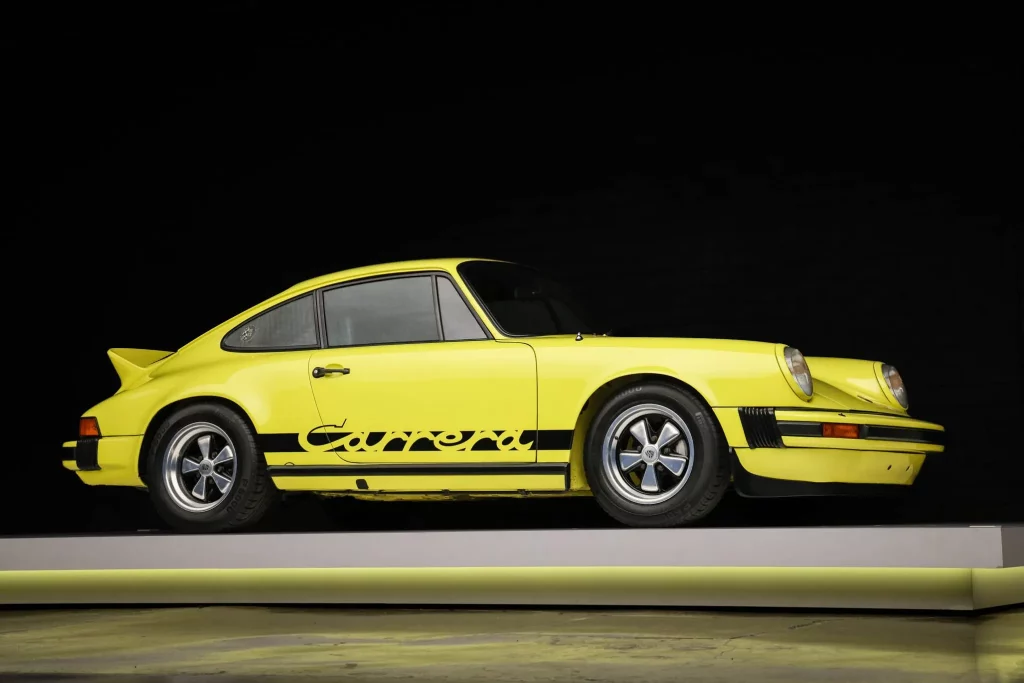
When the Porsche 911 moved to the impact bumper body style in 1974, the lineage was continued with the 911 Carrera 2.7 MFI. The wider rear flares from the RS were retained as were the distinctive “ducktail” rear spoiler and 2.7-liter flat six engine. Horsepower was rated at 210, a significant bump over the standard G-series base 911 which had a mere 150 horsepower. The US received K-Jetronic electronic ignition that reduced overall power output and throttle response compared to the European MFI cars. For this reason, the “Rest-of-World” versions of the 1974 Porsche 911 Carrera 2.7 are highly prized, but still represent a major bargain compared to the iconic 2.7 RS. The lowest sale price of a 1974 Carrera RS MFI was $126,000 and the highest an impressive $434,000. On average, you can find a 1974 model car for half the price of the 1973 Carrera RS. If you don’t mind the lack of power, a US-spec model is even cheaper, with an average price just over $100,000.
R107 Mercedes-Benz
The Mercedes-Benz SL W113 bowed in 1963 and was a clean-sheet replacement for the preceding 300SL and 190SL — both icons in racing and popular culture. The “Pagoda” as it’s called, was developed to bridge the gap between usability and performance. Legendary stylist Paul Bracq penned the overall design of the car and introduced numerous safety features. Powered by 6-cylinder powerplants of various displacements, the W113 SL has become a darling of the Mercedes and automotive enthusiast community over the last 10 years or so and prices have risen accordingly. The average value of a Pagoda stands at about $90,000, with the best-condition cars bringing upwards of $150,000 or more.
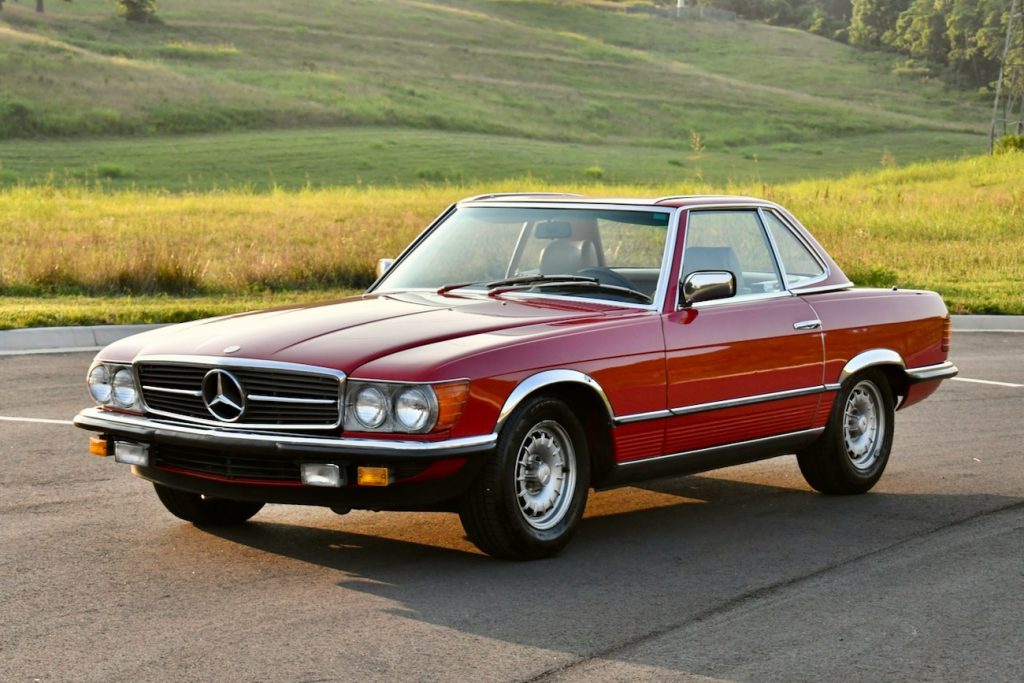
In 1971, the R107 Mercedes-Benz SL took the model in a new direction, emphasizing comfort and long-term usability. Offered for nearly 2 decades, the car could be optioned with a number of different 6-cylinder and 8-cylinder engines. The car was heavier and more luxurious when compared to its predecessor, and was particularly popular in the United States. Unlike the previous generation, the R107 was available in a welded hardtop coupe variant called the C107 and was the only time that Mercedes-Benz based their S-class coupe on the roadster platform versus the larger S-class sedan. The average value across all variants and years for the R107 is about $24,000.
Ford Bronco II
The original Ford Bronco was the brand’s first utility vehicle, debuting in 1966 to compete with other 4x4s like the Jeep CJ and International Harvester Scout while being comfortable enough for street use. The Bronco came in wagon, pickup and open-top variants, evolving over the years to include more powerful engines and higher-level trims. The car succeeded in besting its competitors with a wider track and longer wheelbase to make it a more capable off-roader. Early Broncos rose in value dramatically starting in the early 2010s, and now the average value of a first-gen Bronco is $85,000, with prices varying up or down depending on the variant and generation you choose. The original large-SUV Bronco was built from 1966 to 1996.
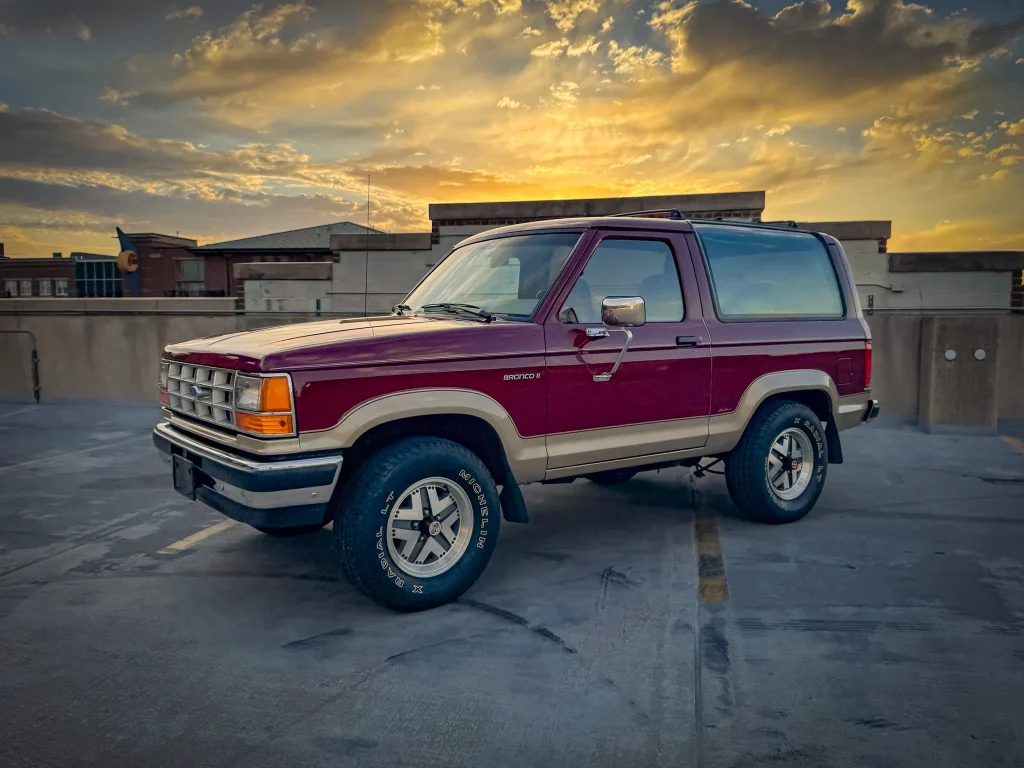
The Bronco’s little brother, the Bronco II, was developed in the earliest days of the SUV boom. Ford wanted to get in on the compact sport-utility trend and the Bronco II was its take on a downsized traditional large four-wheel truck. Based on pickup truck underpinnings, the Bronco II was loved by automotive reviewers at its debut, recognized for its all-round utility and decent fuel economy for a truck. Sadly, the truck was top-heavy and suffered from a serious rollover risk that saw it subject to a NHTSA investigation.
While it was judged as no more likely to go shiny side down as its competitors, its image was forever tarnished and years of lawsuits cost Ford billions of dollars. That lingering image may be why the average price of the capable little Bronco II is about $11,000. You can get a perfect, concours-condition well preserved and low-miles example for under $30,000. Lower the stance, increase the track width a bit and you can significantly diminish the chances of finding ice cream on the ceiling after a Sunday drive.
MkIV VW Golf R32
My love for water-cooled Volkswagens is well-known among readers here on the Wolf and Mare blog. I’m a long-time VW nut, and currently own two Mk4 Volkswagens. While the 20th Anniversary Edition GTI will always be my favorite MkIV, the first iteration of the R32 is the enthusiast’s favorite from Piech-era VW. Featuring what is perhaps the best-sounding six-cylinder engine ever built mated to a six-speed manual transmission driving an all-wheel drive system, the R32 combines rock solid performance with daily driveability. Now a desirable classic, MkIV R32s with low miles and in great condition can exceed their original MSRP of $30,000.
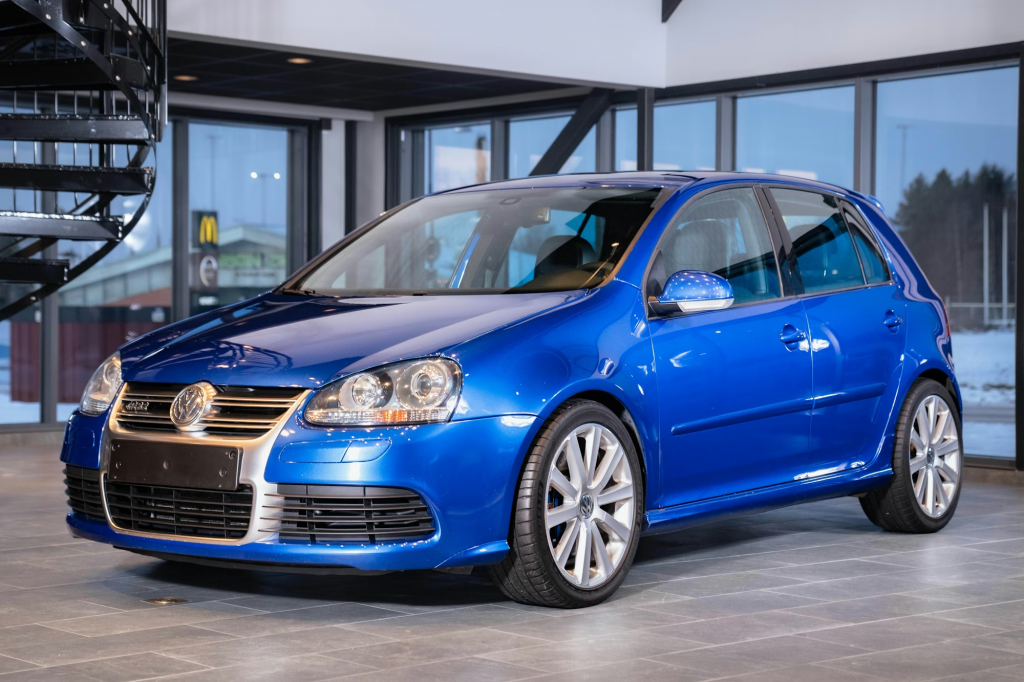
The Mk5 chassis, debuting in 2006, brought the Mk4 R32’s potent ingredients to the 5th-generation Golf platform. The engine and all-wheel drive system was the same, but North America finally got the DSG transmission that European buyers were able to option for the previous gen car. This top-level Golf was objectively a better car than the Mk4 that preceded it, with comparable performance paired with a more comfortable ride and upgraded conveniences. Still, the Mk5 R32 is a bit overlooked by enthusiasts and prices reflect this. The average value hovers around $16,000 as of today. Prices have been very stable, though the finest Mk5 R32s can match the values achieved for the best examples of its predecessor.
Final Thoughts
There’s no real rhyme or reason to the cars I selected for this week’s theme, other than I rather like some of them and others are just top of mind. There are countless examples of “second sons” like these that can be obtained on a discount relative to their iconic older brothers. There are exceptions to this, of course. One example is the Ferrari 512 TR and the original Testarossa. The 512 TR brings a much higher price than its big brother Testarossa, even rarer monospecchio examples.
Car companies generally try to improve on their previous generations with each new updated model, especially when talking about performance brands. That said, nostalgia is a powerful emotion and often a person’s affection toward an older model is based on irrational reasons instead of practical considerations. That’s the case for me when it comes to my affection for the 4th-generation Volkswagen Golf and its variants when compared to, well…practically every generation since. I wouldn’t kick a Mk7 Golf R out of bed, though.
If you know of a great second son I missed in this round-up, feel free drop it in the comments! Have a great week, everyone.
No generative artificial intelligence was used in the writing of this work. Opinions shared in this article are those of the author and do not constitute financial advice.
Wolf and Mare provides car finding, appraisals, and auction services for buyers and sellers of collector European cars. If you’re interested in acquiring an overseas car, give us a call or drop a line!
